06 January 2023

(10) Cliff Lewis' Air Travel Memoirs


Part 10 of a twelve part memoir written by Cliff Lewis, an Air Travel (NZ) pilot... 

This memoir relates to my my larger post on Air Travel (NZ) Ltd which can be found here -


Chapter 10 - Overcoming Simple Problems


By this time the South Westland air service was well established. We had the confidence of the Coasters and we now had radio stations to provide us with all the weather information we needed. Landing strips were marked out and some of them were being enlarged. So what next? 

We need larger aircraft fitted with radio. The directors of the company recognised this and decided to purchase at a de Havilland 90 Dragonfly seating six, including the pilot, and able to be used as a hospital case aircraft with a stretcher. 

This meant that one of our Fox Moths would become idle unless we acquired another pilot. So, once again, Bert Mercer chose a man whom he himself had taught to fly. Jimmy Neave from the Canterbury Aero Club. He fulfilled every requirement that Bert Mercer desired and became a most likeable character to all South Westland. 

This Dragonfly aircraft enabled us to bring wonderful assistance to many Coasters and also visitors from overseas. From here on we had no trouble dealing with serious hospital cases. We had an aircraft that could deal with any emergency and be in contact at every minute of its flight. 

One particular incident comes to my mind. A man was killed when he fell down one of the Franz Josef Glacier's crevasses. He was recovered and although dead, we undertook the flight from Franz Josef to New Plymouth where he was eventually buried. Just another of Air Travel’s services to New Zealand. 

Upon another occasion we received a message from the Jackson Bay PWD camp that a member of the Public Works force had a very bad toothache and he required a dentist so urgently that he was prepared to pay the cost of an aeroplane to bring the dentist to him. Once again Air Travel came to a Coaster’s need and we flew Mr Max Coulson to Jackson Bay to relieve this unfortunate gentleman. Max not only relieved this gentleman of his pain. He also attended to many others who needed dental treatment and altogether extracted some 200 teeth at the camp. 

Another near occasion occurred to one of our pilots. We received a call from Bruce Bay that a lady was in the throws of a birth. We managed to get her to Hokitika, lucky for us, but not for the taxi driver who was taking her to hospital. The child arrived in his taxi. 

Before our aircraft service reached South Westland one Dinnie Nolan told us of an experience he had at one time. A man working at Okuru broke a leg and the only way to get him to hospital was to carry him out on a stretcher (made by 4x2s). They carried this man some 30 miles over a single bush track to the nearest roadhead at Maitahi. Dinnie told me that when the blister on his shoulder nearly reached his ear he nearly gave up. This is what West Coasters are made of. 


We also had another amazing flight. A lady from Okuru at the age of 45 received a message from Christchurch to come urgently to see an ailing sister. We took her to Hokitika railway station and she became most agitated. She did not mind the aeroplanes but explained to us that she had never seen a railway train and asked if we thought it was safe to travel on. Of course we reassured the lady that she had nothing to worry about. 

When we first operated into South Westland we normally thought of average loadings for such as parcels and average size people. However, upon this particular day I was detailed to pick up four passengers at Bruce Bay beach. I arrived to meet my passengers. There were three average size build but one was a lady of some 22 stone. My decision was not to offend the lady so I elected to fly her out to Franz Josef until I returned and picked up her companions. In the meantime I made an urgent request to Hokitika to supply a larger aircraft because I still had some further commitments in the far south. 

These are just some of the simple problems we were able to overcome.

05 January 2023

Jetting in and out of Auckland

A few more at Auckland on 30 December 2022 in much better weather...

Air Asia X's Airbus 330 9M-XXF


United Airlines' Boeing 777-200 N78013

Air New Zealand Boeing 787-9s... ZK-NZC

ZK-NZF

ZK-NZJ

Air New Zealand Boeing 777-300s ZK-OKN

...and ZK-OKS

Skyline Aviation's Cessna 680 Citation Sovereign ZK-RXD


(9) Cliff Lewis' Air Travel Memoirs


Part 9 of a twelve part memoir written by Cliff Lewis, an Air Travel (NZ) pilot... 

This memoir relates to my my larger post on Air Travel (NZ) Ltd which can be found here -


Chapter 9 - Fuelling Up


One of our biggest problems in this remote region of course were fuel supplies. At Hokitika the problem was easy, we had a 200 gallon tank alongside the hangar but at Franz Josef we were dependent upon road transport deliveries with 44 gallon drums. At the Haast we first had all our drums bought from Greymouth by the coastal vessel Gael and they were brought ashore by dinghy and then carried to the Cron homestead by sledge. Later, when the Jacksons Bay wharf was established a road was was through to Okuru and the Haast, this became a slightly easier matter of transportation. 

Both at Franz Josef and the Haast we had our problems. We had to have a wooden ramp built to roll these heavy drums onto. This was no trouble to West Coasters; they organised it in no time. Okay, we had our fuel where we wanted it, but how to get it into our aircraft? 

Our petrol tanks were located in our upper wings so a smaller container was required to manage this. We used 4 gallon drums, then with the use of a ladder we could climb up to the top wing to insert the contents. But we heard a very serious problem, the possibility of any condensation in the 44 gallon drum causing water to become involved with the petrol. So we used a very large funnel which had a gauze filter at its outlet. This did not satisfy Bert Mercer and so for a safety precaution we always used a very large chamois as well. 

Just imagine it, you are in a hurry to carry on to the next landing place, but, you know that you need more fuel. Take your 4 gallon can to the 44 gallon drum, fill it, get your ladder out, climb up the ladder, and pour it into your aircraft petrol tank. Try this when it was raining and you had to cover everything as well as getting this precious petrol into your aircraft. 

Fuelling in the far south was only one of our problems, we also had to keep up with Civil Aviation standards, that an aircraft had to have a daily inspection as laid down by the Department. All three of us had to have our Commercial Licences endorsed by the Civil Aviation authorities that we were capable to carry out this operation both upon engines and airframes. This all added to the anxious desire to get on our way. We all met this requirement to the satisfaction of the Department. How? I just do not know, but we did.

Then, when we returned from the south, we had to hose down the aeroplane to get rid of any sand or salt spray before we handed it over to Owen Templeton to carry out the necessary maintenance. When you were a pilot on the Coast you had to be very versatile!!!


04 January 2023

Last Year's A321s

 On the 30th of December 2022 I caught three of Air New Zealand's Airbus 321s at Auckland...

My first photo of domestic Airbus 321 ZK-OYA

Used domestically and internationally, ZK-NND...

and ZK-NNE. Looking forward to flying on one of these in February

(8) Cliff Lewis' Air Travel Memoirs


Part 8 of a twelve part memoir written by Cliff Lewis, an Air Travel (NZ) pilot... 

This memoir relates to my my larger post on Air Travel (NZ) Ltd which can be found here -


Chapter 8 - Flying by the seat of your pants


In the very early stages of our service to South Westland we had no weather reports to assist us. What we used to do, however, was to listen to Radio 2YA who at that time were giving out the barometric pressures for the main cities of New Zealand, Australia and Tasmania. From these reports, with our own knowledge of how a weather map was constructed, we would sketch our own isobars and thus gain the knowledge of the type of weather to be expected, either cyclonic or anticyclonic. This enabled us to anticipate when we might expect wind changes which might be favourable or otherwise to the beaches and other awkward landing places which we had to use. 

The Meteorological Office at Kelburn was also seeking more reporting places in New Zealand and requested the assistance of the P and T Department to establish more radio stations around New Zealand. The two departments worked hand and glove together and many were established. Two in particular gave our company tremendous assistance, one at Jackson Bay which was manned by the indomitable Gordon Bowman and another station at Hokitika manned by the equally competent operator Jack Williams. Both these operators knew exactly the information that was vital to our operations. 

These aeradio stations were established in late 1937/early 1938... Cliff is slightly wrong in that Gordon Bowman was always based at Hokitika. I presume Jack Williams was an operator at Jackson Bay.

For instance it could be raining so hard at Hokitika that you could not see 100 yards and then a message would come through from Gordon at Jackson Bay saying that the wind had changed to the south west. This was the clue we were waiting for. We could take off from Hokitika and fly at sea level some three miles off the coast watching for every muddy stream making its way out into the Tasman. We were able to count these streams and recognise which river they represented. When we reached the one we wanted we would then follow it to the coast and fly upstream at zero altitude to the landing strip we wished to reach. This was “flying by the seat of your pants” but it worked perfectly. 

Our gratitude to both these government departments cannot be expressed in words. Whereas before we were dependent upon a single telephone line, that at times was disrupted by falling trees, we now had a direct communication with the far south and received three weather reports daily, the first at 7am, the next at 12pm and another at 4pm. We also were able to request any extra specified information we required. These two radio stations also greatly assisted the far south settlers in the cases of sickness or accidents. A mayday a message from Gordon to Jack and Air Travel were on the way to help. 

Fox Moth ZK-ADI on the Neil's Beach airstrip just a kilometre or two away from Jackson Bay... the sun shining as usual. Photo : Ref: PAColl-3060-014. Alexander Turnbull Library, Wellington, New Zealand. /records/23110233


Not only did these two Departments come to our aid, in came the then Public Works Department Aerodrome Section under Eric Smart and Allan Pritchard. They immediately recognised the assistance our small company needed so without hesitation they saw that settler’s paddocks should be marked out with civil aviation marker boards and that some of them should be extended to accommodate our future developments. No stone was left unturned to help Air Travel (NZ). The Coast owes as much to these men as it does to Bert Mercer. 

There was also one other means of communication on the Coast that always worked, “the bush telegraph.” It was amazing at times how people knew that Air Travel was on its way south and a lot of unexpected travellers and freight were many times encountered. Air Travel always met their needs. How? I often look back and wonder but it happened to their gratitude.


03 January 2023

Gulf Back to Auckland

For my return flight from Claris to Auckland on 1 January 2023 I was delighted to see Barrier Air's newest Cessna Caravan, Gulf, a.k.a. ZK-SDG, arrive to be my ride home. It was the only one in the Barrier Air fleet that I hadn't flown in...
 
Barrier Air's Cessna Caravan ZK-SDG arriving into Claris from North Shore on 1 January 2023. With the strong easterly SDG landed on the grass runway.


A feature of Claris airport are the great backdrops for photos


Flight GB 596 getting airborne over a wild sea 


The northern end of the Coromandel Peninsula

Passing Waiheke Island, New Zealand's third most populous island


Motukorea/Brown's Island with its volcanic cone very clear


West Tamaki Head at St Heliers

 Metroport, an inland port for the Port of Tauranga. Companies can drop off or pick up freight from there as if they were doing it to the seaport directly and the inland port contains all of the usual customs facilities needed to process freight. To get containers between Auckland and Tauranga containers are loaded on to trains and sent between the two sites. 

Joining for Runway 05 at Auckland International


Finals 05


Thanks Sophia... another great flight


Plane Spotting at Great Barrier's two airports

Cessna 425 Conquest I N425HB was a great New Years Day catch at Claris airport on Great Barrier Island on 1 January 2023.


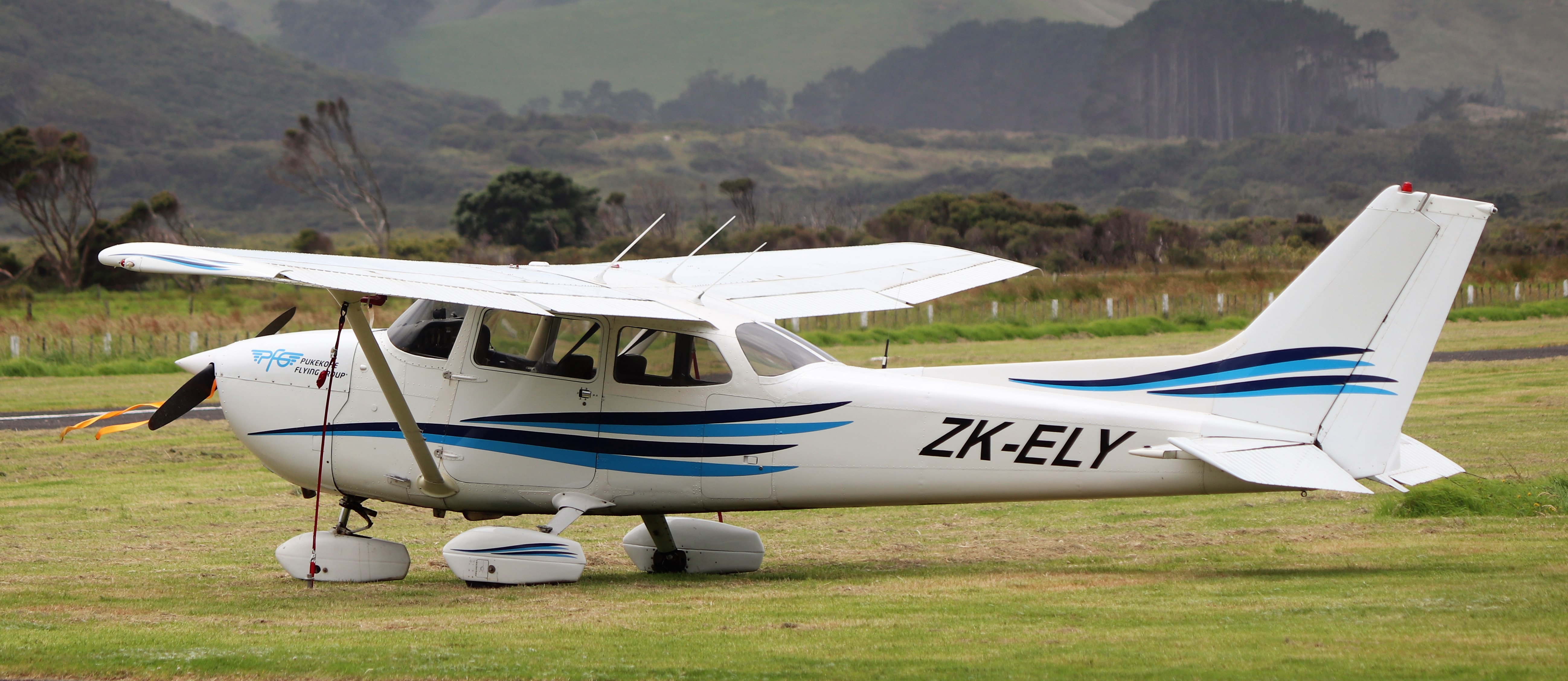
I was also delighted to take my first photo at Great Barrier Island's second airport, Okiwi on 1 January 2023... the Pukekohe Flying Club's Cessna 172 ZK-ELY

There was a top dresser also at Okiwi with a cover which I didn't photograph. There were also a lot of light aircraft at Claris, mostly with covers, the bane of plane spotters' lives or they were too distant to get a decent photo.

(7) Cliff Lewis' Air Travel Memoirs


Part 7 of a twelve part memoir written by Cliff Lewis, an Air Travel (NZ) pilot... 

This memoir relates to my my larger post on Air Travel (NZ) Ltd which can be found here -


Chapter 7 - The Whitebaiters


At the end of each catching season the fisherman from the southern rivers would casually make their way north and might spend a night at Williams’ Fox Glacier hostel, then the Graham’s Franz Josef hostel and thus onwards to their favourite Hokitika pub. Here they would gather and discuss the season’s catch and their returns. 

MacIntyre and Douthwaite were able to tell their friends about the new service that Bert Mercer's aircraft were offering them. These gentlemen became interested and made a special journey across the Hokitika River bridge to the aerodrome to have a talk with this chap Mercer and ask him if he could land at their place of fishing - the Cook river shingle strips, Blue River shingle strip, yes and Dinnie Nolan of Okuru asked Bert, could he fly his catch out of the Cascade beach at the mouth of the Cascade River. “Of course,” Bert assured each of them that it could be managed. So, Air Travel (NZ) Limited had further points of call for whitebait freight, in all Paringa River strip, Cook River strip, Blue River strip and Cascade beach south of Jacksons Bay by some 30 miles. Bert assured everybody that the catch would be delivered to the Hokitika railhead in time to catch the night goods to Christchurch for the next day's market by all of his aircraft and pilots. Whitebait freight was now a very integral part of Air Travel's business. 

Fox Moth ZK-ADI at Paringa with Tom Condon (left), pilot Jim Hewitt in the leather jacket, Arthur Condon, and whitebaiter Bill Douthwaite and Jack Condon (right)


Not so with Dinnie Nolan of Okuru. He saw great possibilities, his own canning factory! So by the coastal vessel Gael he acquired the materials to build his canning factory and became New Zealand's first exporter of canned whitebait, this by a New Zealander living 130 mile south of Hokitika in one of New Zealand's most isolated parts. What enterprise and fortitude!!!

None of the river strips were longer than 400 yards long, some a little less, so we were limited to the load we could uplift at any one time.  All catches had to be placed in the old type kerosine tin (they usually held 70lbs). Our maximum uplift at no time could go beyond 16 tins. If they had more we would fly out the first load and take it to Waiho, return, take out the balance to Waiho, uplift the lot and fly off to Hokitika with a deadline in time to have one of the Kennedy’s taxis get them on the night goods train. Air Travel never let these fishermen down.  

Once a very unfortunate occurrence did happen but it was not the fault of Air Travel. The catches had been safely placed upon the Railways and the train left Hokitika. Some shunting had to take place at Stillwater Junction a little east of Greymouth.  The whitebait truck was unfortunately left on the siding. It was only discovered by the Railway when a very unpleasant odour was permeating the Junction some three days later. 

Whitebait season on the West Coast meant a lot of northbound freight. Here Air Travel (NZ)'s Fox Moth ZK-ADI is seen at Paringa River. Photo : Whites Aviation Ltd :Photographs. Ref: WA-09365-G. Alexander Turnbull Library, Wellington, New Zealand. http://natlib.govt.nz/records/22858230

02 January 2023

First flight of 2023

I had to make a day trip to Great Barrier Island for so my first flight of 2023 was with Barrier Air to Claris taking GB587 which was flown by Alex in Cessna 208 Grand Caravan ZK-SDD. What a great way to start the New Year.

One of the things I have been enjoying on my flying to and from the Barrier of recent times is discovering the islands of the beautiful Hauraki Gulf...

Lining up 05 at Auckland

A little plane spotting on departure, Air New Zealand's Boeing 787-9 ZK-NZM

Full zoom and cropped so a bit blurred, three versions of Barrier Air's colour scheme... from left, ZK-SDB, ZK-SDG and ZK-SDE

Airwork's bland Boeing 737-300 freighter ZK-TLE

Tasman Cargo Airlines' second Boeing 767-300 freighter, VH-XQU

A feature of Auckland I hadn't discovered before... this from Wikipedia... Pukaki Lagoon, is one of the volcanoes in the Auckland volcanic field. It has a 600 m wide explosion crater, with a surrounding tuff ring. After an eruption about 65,000 yrs ago the crater filled with freshwater and became a lake. It was breached by the sea as sea-levels rose after the end of the last ice age about 8,000 yrs ago and became a tidal lagoon. This was dammed and drained and used as a speedway from 1929 into the 1930s (Henning's Speedway). It is now farmland.


Auckland's most impressive volcano... Rangitoto overlooking its urban charge

Panmure basin to the left of the bridges between Mount Wellington and Pakuranga


The Auckland CBD, harbour bridge and upper reaches of the Upper Waitemata Harbour

The Auckland CBD and harbour bridge

The Tamaki River flowing into Motukorea channel - Motukorea/Brown's Island off Musick Point and Rangitoto beyond with a skiff of cloud covering the crater

Rangitoto

A lot of yachts and launches moored at Motuihe Island

Motutapu Island which lies east of Rangitoto... The north end of Motuihe Island is seen at the bottom

Rangitoto and Motuihe Island

Don't be alarmed at the angle... the western end of Waiheke Island with a whole more yachts and launches moored

The Noises and the David Rocks/Four Islands

Rakino Island... more yachts and launches

Approaching Great Barrier Island


Barrier Air flies to Claris


Claris Airport

Kaitoke Creek

Finals for Runway 10 to Claris

Alex departing Claris in ZK-SDD for his last flight of the day on 1 January 2023