28 August 2011

Waiheke Airservices and their Great Barrier Island Grocery Run


Waiheke Airservices was formed in late 1994 and began operations from Waiheke’s Reeve airfield using locally owned Cessna 172M Skyhawk II, ZK-DXJ (c/n 17265810), with Jeanette Rhodes as chief pilot. Initially the company offered scenic flights and charters, however, in April 1995 Great Barrier Airlines announced it was withdrawing its short-lived air serviced from Reeve Airfield. The void left by Great Barrier Airlines’ departure was filled by Waiheke Airservices and Gulf Island Air which had been operating from Waiheke’s Stonyridge airfield since late 1992.

Gulf News, 13 January 1995


While Waiheke Airservices offered on-demand flights to Auckland it was particularly interested in flights to Great Barrier Island. In May 1995 Dennis Musson told the Barrier Bulletin that his company was keen to fill the lack of an air service between Waiheke Island and Great Barrier Island. "We are interested in seeing a good service in both freight and passengers and are committed to both Waiheke and Great Barrier. Passengers travelling on the Waiheke-Great Barrier Airlines run were often required to travel to Mangere first and change to another aircraft, which made for a lengthy trip.” Flights to Great Barrier were initially offered on an on-demand basis for a minimum of two passengers at a cost of $65 one way using the four seat Cessna 172.

Waiheke Airservices' first Cessna 172, ZK-DXJ taken at Ardmore on 14 November 1998.

In April 1996 two companies were formed. White Knuckle Airlines Limited was formed by Brian Saward and seems to have been more oriented towards aircraft ownership. Waiheke Airservices Ltd was formed by Denis Musson, Brian Saward and Robert Silich, and this company included the management and operation of Reeve Airfield.

The demand for the charter flights built up to such an extent that in April 1996 the company established a twice a day scheduled service between Waiheke and Auckland, calling at both Auckland International and Ardmore airports, according to demand, and between Waiheke and Great Barrier Islands. Return flights on both routes were offered in the early morning and late afternoon. In June 1996 Cessna U206G Stationair ZK-EJG (c/n U20603549) was added to the fleet. This aircraft was no stranger to the Barrier having been used previously on the North Shore Aero Club/Air North Shore service between North Shore Airfield and Great Barrier Island. Another Cessna 172F, ZK-CKN (c/n 17252194), was used from mid-1997 to mid-1998 and Cessna 172M Skyhawk II ZK-PRF (c/n 17262667) was added to the fleet in 1998.

Barrier Bulletin December 1996


Waiheke AirServices' Cessna 206 ZK-EJG at Auckland on 4 October 1998

The Auckland service was subject to competition from the fast ferries and this service was soon operated on an on-demand basis. The Great Barrier service, however, proved to be popular with boaties and those who needed to move among the islands of the Hauraki Gulf. The Waiheke Airservices’ flight also proved popular for its "grocery run" to the Barrier from Waiheke's supermarket. Orders were placed with the supermarket by phone, fax or internet. The supermarket delivered these to the airfield and, in 1999, for $4.00 a banana box of groceries was flown to Great Barrier Island. 


Barrier Bulletin 15 February 2000

By 2000 the company was rebranded as Waiheke Air.

In 2001 the airline was operating profitably. It was carrying over 2300 passengers a year, most of these being to Great Barrier which it flew to most days. In addition it would fly up to 40 flights to Auckland a month as well as operating general charter flights around the Hauraki Gulf. On the 4th of July 2001, however, the Civil Aviation Authority temporarily suspended Waiheke Airservices' operations certificate. Three weeks later it grounded the company after its investigations showed that Waiheke Airservices “was operating without regard to civil aviation and transport safety regulatory requirements, was operating outside the limitations of its certificates and those of its personnel, and senior personnel had inadequate knowledge of civil aviation safety rules.” Brian Saward, one of the owners, told the local Waiheke and Barrier newspapers, “The decision was based largely on our paperwork, not on our ability to operate" and he felt the CAA went over the top in dealing with the situation. "They came down on us like a ton of bricks over some fairly lightweight issues." 


Gulf News, 2 August 2010

Gulf News, 30 August 2010


By the end of August 2001 Waiheke Airservices filed a proposal with the authority offering to completely restructure and take on more staff, including a new chief pilot, a quality assurance and a maintenance manager and a new chief executive officer, in order to regain its certificate. The company finally took to the air again in late November 2001 but in 2002 the airline and airfield were separated. Waiheke Air Services (2002) Ltd was established by Denis Musson and focussed on its activities on Reeve Airfield while Waiheke Air Ltd was established by Michael Maguire and Cees van Heemert and they operated the air service.

People Included:

Terry Easthope (pilot and owner),
Chris Harris (pilot),
Michael McGuire (pilot)
Jeanette Rhodes (pilot)
Brian Saward (owner)
Theo and Sharon Schaeffer (agent GBI)

27 August 2011

New Qantas Jet Jets In


Wayne Grant captured Jetconnect's new Boeing 737-800 ZK-ZQH in its Qantas livery arriving at Auckland on the 27th of August 2011.
 

25 August 2011

Mystery Planes...

In the process of sorting my photos I have a couple of mystery photos that I have some questions about...

Taken at Masterton in January 2011... What aircraft type is this??? Is it NZ registered???

Taken at North Shore in November 1986 what is the registration of this Avenger???
Any help would be much appreciated... Cheers, Steve westland831@gmail.com

24 August 2011

Podded 172 and a couple of other pics

Ardmore was very quiet yesterday with only a three photos taken...

A podded Cessna 172 - I've never seen one before. Here Cessna 172 ZK-DKH models a pod and dropping wing tips - has this modification got a name??? DKH was Great Barrier Airlines' first in fleet and operated their inaugural flight. It was also used by Westland Flying Services. Photo taken at Ardmore on 22 August 2011 by S Lowe
Getting to be a rare site at Ardmore is seeing a Piper Cub in the circuit. ZK-BQY taxies in after finishing its flying. Photo taken at Ardmore on 22 August 2011 by S Lowe
Treetops Lodge and Estate's Eurocopter AS 350 B3 ZK-IKJ at Ardmore on 22 August 2011. Photo : S Lowe

23 August 2011

What could have been a Kiwi airliner - 3. Shorts Sealand

Throughout the years different companies have advertised in New Zealand magazines in the hope of selling their aircraft in our part of the world...


Whites Aviation, December 1947

See also : http://en.wikipedia.org/wiki/Short_Sealand

and : http://theflyingboatforum.hostingdelivered.com/viewtopic.php?f=16&t=477

21 August 2011

A Tale of Two Airfields - Stonyridge and Reeve Airfields

Stonyridge Airfield - Waiheke’s first commercial airfield

Waiheke Island’s first air service was operated by NZ Tourist Air Travel Ltd using amphibious Grumman Widgeons. The amphibian service was subsequently operated by Mount Cook Airlines from 1968 and Sea Bee Air from 1976. Both companies used Grumman Widgeon and Goose aircraft.

The first land-based service to Waiheke began in 1975 when Rex Air Charter began scheduled flights from Ardmore to Waiheke’s Stonyridge airfield on the Onetangi road. The Stonyridge airfield was a one way airstrip which had originally been used as a farm topdressing strip. The Civil Aviation Division required improvement work It be carried out on its undulating surface before it issued a permanent aerodrome licence. The improvements were such that a change in zoning had to be sought and this brought the airfield into the public arena. Concerns being expressed about its suitability as an airfield and complaints were also levelled about the public nuisance that flight operations caused. Such complaints about the effect of aircraft noise on the Waiheke’s quiet life have been a hallmark of the island’s aviation history.

Despite the limitations of the airfield the six month suspension of amphibious services in 1976 boosted Rex Air Charter’s business and so the company negotiated a 20-year exclusive lease of the airfield from the landowner, Mr K Murphy. The increase in traffic was a mixed blessing for the company. With the increase in traffic the airfield surface deteriorated in the wet winter of 1976 and the company had to restrict the number of flights. Wet weather was going to be an on-going issue for the airfield. The following year, in conjunction with the St John Ambulance Association, emergency landing lights were purchased and used for night medevac flights.

Rex Air Charter/Motor Holdings' Cessna 207 at Stonyridge airfield in January 1985

The Development of Reeve Airfield

Rex Air Charter strictly enforced their exclusive rights to use Stonyridge Airfield preventing all other commercial and private operations. This stance was always controversial and so in 1985 Chris Reeve, a local farmer and Waiheke Island County councillor, looked to establish his own airfield. By March 1986 construction was well underway and the opening round in the dogfight between the two airfields was set to commence.

In the Gulf News of the 21st of March 1986 Chris Reeve suggested that his airfield would be the best on the island and suitable for commercial use. He said he “was building his strip to meet the requirements of a category ‘seven’ airfield; the existing airfield near Onetangi is variously described as a ‘nine’ or ‘ten.’” The categories, established by the Civil Aviation Division, ranged from a one, for an airport like Auckland International Airport, to a ‘ten’ for a basic airstrip in a remote area. Chris Reeve sought to make his airfield suitable for commercial or general use and capable of taking all single-engine planes and a number of twin-engined craft including a Britten Norman Islander.

Chris Reeve and the Civil Aviation Authority were positive about the new airfield. Asked whether Rex Air Charter would use the new airfield Brian Sutherland, the airline manager, told the Gulf News he was “waiting to see what the (Reeve) strip looks like when the earthworks are finished." The Gulf News reported him, however, as being less enthusiastic about the new field than Mr Reeve or the Civil Aviation Division.

The third player in the brewing controversy was the Waiheke County Council. The Council was frustrated that Chris Reeve built the airfield without planning consent. The Gulf News of the 25th of April 1986 reported that “Mr Reeve has now been given 14 days to lodge his planning application. If he doesn't, then he will be notified that he is in breach of council ordinances and the matter will be handed over to the county solicitor.”

Reeve airfield was officially opened to private flights on the 29th of September 1986 but the Waiheke County Council kept Great Barrier Airlines circling waiting to land while it heard an application for planning permission to use the new airfield for commercial flights.

The Dogfight begins

“Our Strip’s Better than Your Strip – Threats to Airfield’s Future” read the headline of the Gulf News on the 28th of November 1986. The article included sound bites from the various players…

"Now that Civil Aviation have licensed a category 8 aerodrome (Reeve) on the island I expect that they will wish to see discontinued commercial air services from the other airstrip (Stonyridge).” - Chris Reeve, airport owner.

"It (Stonyridge) is unsafe from a flying point of view in a number of respects ... its use is restricted to only one commercial operator, it is the most unsatisfactory airfield sustaining a scheduled air service in New Zealand." - Jim Bergman, Great Barrier Airlines managing director.

“It is understood that Civil Aviation Auckland Division have recommended to Head Office that the licence for the existing (Stonyridge) airfield be revoked." - Richard Brabant, counsel for Great Barrier Airlines.

"Civil Aviation reluctantly agreed to the issue of a licence (at Stonyridge) whilst imposing severe limitations upon the use of the airstrip because of safety reasons." - Ted Watts. General Aviation Inspector for Civil Aviation Division, Ministry of Transport.

Meanwhile, early in 1986, ownership of the Stonyridge airstrip had passed to George Richardson. Despite being the landowner he was not allowed to land his own aircraft on the Stonyridge airstrip. He told the Gulf News “his attempts to negotiate with the airline, which is owned by the Motor Holdings group in which paper magnate and Waiheke landowner, John Spencer and his brother Peter have been spectacularly unsuccessful. Every time I approach them they say: 'We're a $41 million company, who are you?'”

On the 25th of January 1987 Reeve Airfield was given a full operational licence by the Civil Aviation division of the Ministry of Transport but the Waiheke County Council had still not given approval for commercial use of the airfield. There was also a growing swell of opinion about the impact the airfield would have in terms of noise and also the impact of aircraft on adjacent ecological reserves. Questions were also raised about the safety of the new ridge-top airfield in regards to its susceptibility to turbulence and wind sheer.

By mid-1987 no progress had been made on the matter of commercial flights using Reeve. George Richardson, however, unable to fly from his own airstrip, had commenced offering flying lessons from Reeve airfield under the name of the Waiheke Aero Club. This only added fuel to the fire, the local Planning Committee saying this was a commercial activity.

The matter finally came to the Planning Tribunal in October 1987 but it took some months before it ruled in 1988 that commercial flights could not use Reeve.

Five Years On

In 1992 another attempt to made to open Reeve airfield to commercial use. Waiheke Island Airfields Ltd applied for a resource consent to develop the airfield in order to open it up to general use by both commercial operators and private pilots. The new application was heard under the Resource Management Act as opposed to the earlier application which had been heard under the Town and Country Planning Act it. The Planning Tribunal included the Waiheke Planning Committee and members of the Auckland City Regulatory Committee. The new application stipulated that aircraft would be required to land from and take off to the south except when conditions made that unsafe. This mean aircraft avoided flying over nearby residential properties. The application envisaged commercial traffic to average two Cessnas per day and the "occasional” helicopter in winter and up to five Cessnas, three Britten Norman Islanders and one or two helicopters per day in summer. The application also sought approval for earthworks necessary in the construction of a new access road. There were 36 objections to the application, most relating to noise and safety, and these dominated the hearing which began at the end of July.

Gulf News, 24 July 1992

Gulf News, 7 August 1992
The Gulf News report captured the fiery nature of the hearing. “In the best tradition of Waiheke politics - or the worst, depending on your perspective - the gloves were off and accusations flew thick and fast. The planners who recommended the application by Waiheke Island Airfields Ltd be approved were labelled incompetent and biased by some objectors; local community board member Joe Waite, also accused of bias, was forced to stand down from the hearing; and the applicants were called unreliable.” The lawyer for the airfield company, Paul Cavanagh QC, said, “The hearing had brought the division in the community into sharp focus. The majority of Waiheke Islanders accepted some change, he said, while a vociferous minority were opposed to anything. Because of the conditions involved including the flight paths, the fears of Onetangi residents that their skies were about to be noisily invaded were groundless and will rapidly evaporate.” Once again, however, the application was declined, the Planning Committee saying “the applicant, Waiheke Island Airfields Ltd, failed to demonstrate there was a need for an airfield as required by the Operative District Plan and that commercial use of the airfield would have also detracted from the ‘maintenance and enhancement of the amenity values and the quality of the environment in the area.’” In response the airfield company announced it would appeal the decision.


Gulf News 14 August 1992

Gulf News 21 August 1992

Changes at Stonyridge

In mid-1992 ownership of Waiheke Air Services (which had operated as Rex Air Charter until 1986) passed from Motor Holdings to Flightline Aviation Ltd. The new owners were more open to the possibility of other users having access to Stonyridge airfield and in October 1992 Flightline Aviation relinquished its exclusive licence to use the airstrip. At the same time they announced their service would only operate on demand from November and their air service subsequently ended. George Richardson, the owner of the airstrip, was quick to use the airfield and he formed Gulf Island Air to offer scenic flights with his Piper Pa28-180 Cherokee ZK-SNE.

With the availability of Stonyridge Great Barrier Airlines immediately started advertising that it would operate to Waiheke and began flying there in November 1992. The airline quickly found the short strip with its steep slope at one end difficult. The company was unable to use its Britten-Norman Islanders into the strip because of its Category 9 status. By February 1993 Great Barrier Airlines had pulled out of Waiheke and had established a relationship with Gulf Island Air to operate transfer flights to and from Auckland and Great Barrier Island on their behalf.

Gulf News, 23 October 1992

The matter of Reeve Airfield goes back to the Tribunal

In February 1993 the airfield company returned to the Planning Tribunal to have its appeal heard. It was not until August, however, that the Planning Tribunal decision started to clear the way for Reeve Airfield to be used as a commercial airfield provided there were satisfactory controls on noise and earthworks. The judge said approval would not be given for take-offs to the north unless the parties could find a way around a Civil Aviation Regulation forbidding turns below a height of 500ft. Waiheke Airfields Ltd and the Auckland City Council were given six weeks to reach agreement on an appropriate set of conditions.

Dog fight takes to the skies

On the 15th of October 1993 the Gulf News reported that “Rivalry between Stonyridge Aerodrome and the so-called Reeve Airstrip - hitherto confined to sniping in the planning arena - burst into open dog fighting two months ago. Stonyridge strip owner George Richardson, operator of Gulf Island Air, lodged a formal complaint that an aircraft based at the Reeve strip had made an illegal commercial flight to Great Barrier. In return, Dennis Musson, a member of the syndicate which owns the Whakanewha block, on which the Reeve strip is situated, and owner of the aircraft in question, filed a complaint that the Stonyridge strip was not up to the standard needed for commercial flights.” This was the forerunner of Waiheke having two commercial operators, Gulf Island Air and Waiheke Airservices, both of which will feature in future posts.

Gulf News 11 June 1993

Gulf News 27 August 1993

Gulf News 27 August 1993

Open for Business

Final approval for commercial use of the Reeve Airfield finally came in early 1994. In granting the approval Judge S E Kenderdine included 27 conditions agreed to by the parties including aircraft having to land from and take-off to the south except when conditions make this unsafe. With all the conditions finally met the airfield received its first Great Barrier Airlines’ flight on the 26th of August 1994.

The current arrival and departure procedures for Reeve Airfield showing how the aircraft must avoid residential areas. http://www.aip.net.nz/

The commencement of the service was not without incident. Within days there was a confrontation between a Great Barrier Airlines’ pilot, his passengers and a local resident. The local, who happened to be the local residents' representative on the airfield's safety and management committee, walked out onto runway as the pilot had lined up the Britten Norman Islander for take-off. The protester told the Gulf News that after a plane had flown low over his house for the second time in two days while making a landing approach from the north, in contravention of conditions pertaining to the planning consent, he went and spoke to the pilot. "I felt the pilot had not been briefed on the restriction of movements at the northern end of the strip and that it was time someone told him."

Gulf News 2 September 1994

Ironically the Great Barrier Airlines’ service only lasted until April 1997, leaving Waiheke Airservices and its successor, Waiheke Air, being the only regular commercial users of Reeve Airfield.

By then, however, the airfield company was embroiled in another dispute with conservationists over more earthworks and the removal of trees.

Today Stonyridge Airfield is a vineyard with one of its wines aptly named “Airfield.”


Reeve Airfield, the ultimate victor in the battle of the two airfields, still has restrictions on landings. There is now no longer any scheduled service to Waiheke though Air Discovery has their Cessna 206 ZK-WWH based at Reeve and it offers transfer flights to Auckland, Great Barrier Island and the other airfields of the Gulf on demand.

For a great photo of Reeve airfield see : http://www.aeropark.co.nz/index.html

19 August 2011

Planning Overseas Travel? Option 2 - to London on the Kangaroo Route


By flying boat or Lancastrian - which would you choose?
Whites Aviation, February 1947

18 August 2011

Whangarei and North Shore yesterday...

I spent Tuesday and Wednesday morning at the Whangarei library researching for future posts... a nice warm spot in the midst of these cold days. I found lots of great material but a couple of things I didn't find were... 
  1. When did Southern Cross Airways end their Auckland-Whangarei service?
  2. When did Whangarei Air Taxis start using the GAF Nomad ZK-NDB on their Auckland-Whangarei service? 
Any information, clues, thoughts etc would be much appreciated. My email is westland831@gmail.com
 
A quick trip to Whangarei and North Shore airports on the way home yielded a few bits and pieces. 
 
Airwork's Piper Chieftain, ZK-FOP, taxiing in at Whangarei on 17 August 2011 for a fuel stop. Photo : S Lowe
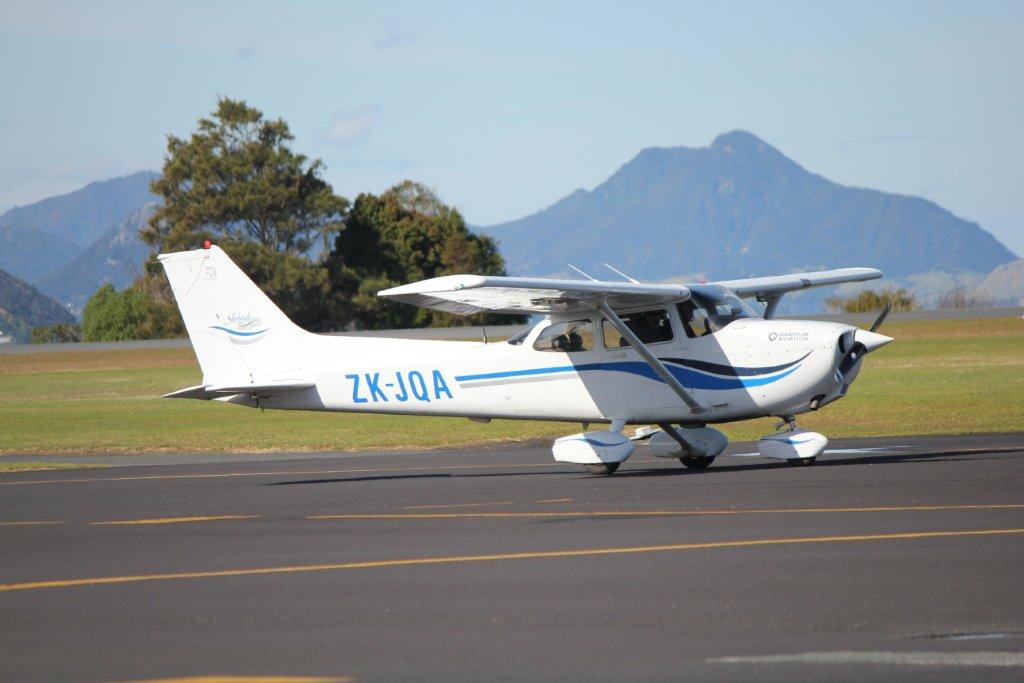
A couple of Quantum Aviation's Cessna 172s were out and about on training... above ZK-JQA and below ZK-RQA. Photos taken at Whangarei on 17 August 2011 by S Lowe
 

Skydive Ballistic Blondes' Cessna 182 ZK-SBB taxis out on, as a friend calls it, another "meat bombing" mission. Airwork's Piper Taken at Whangarei on 17 August 2011 for a fuel stop. Photo : S Lowe 
Meanwhile, at North Shore not much was happening as I drove past apart from Cessna 185 ZK-WHJ taxiing to the southern hangars. Taken at North Shore on 17 August 2011 by S Lowe

17 August 2011

DIV and DIW


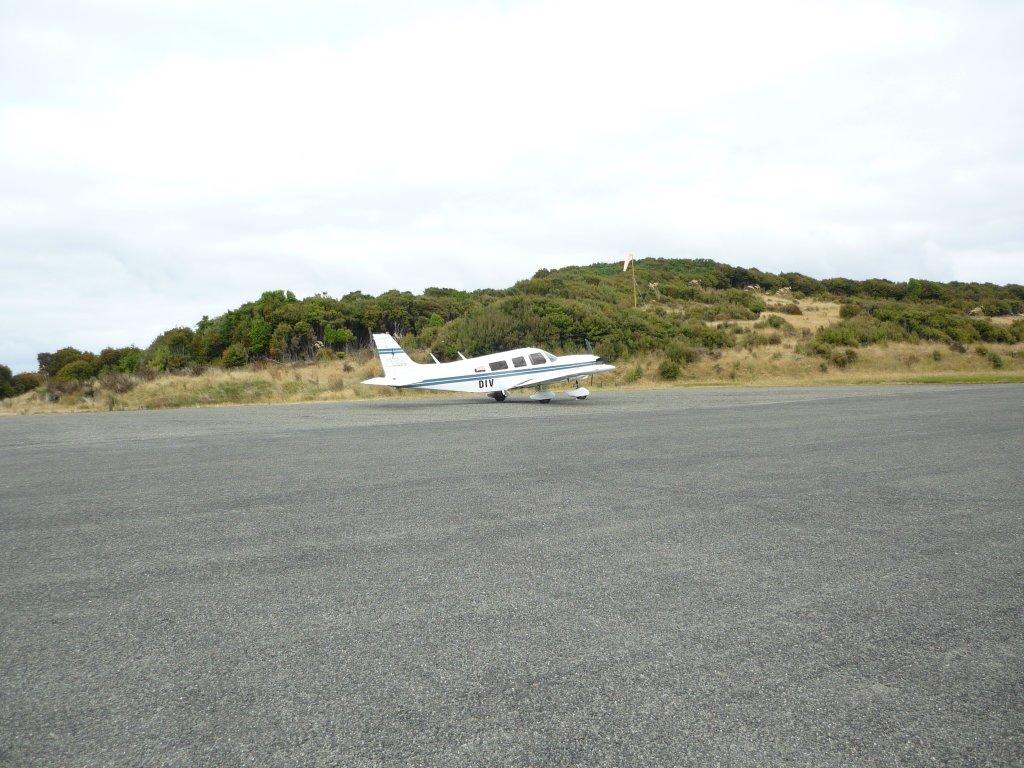
Philip Kyle sent me these photos of South East Air's Piper Cherokee Six ZK-DIV and his own Piper Cherokee ZK-DIW taken at Ryans Creek last year. The Cherokee Six, ZK-DIV, went for a swim at Stewart Island last week... http://3rdlevelnz.blogspot.com/2011/08/stewart-island-mishap.html. The Southland Times has great photos of it being flown back to Invercargill under a helicopter.

Piper Pa32 Cherokee 6 ZK-DIV at Ryans Creek Airfield on 7 April 2010 - Photos : Phillip Kyle


Philip's own Piper Pa28 Cherokee Cruiser ZK-DIW at Ryans Creek Airfield on 7 April 2010 - Photo : Phillip Kyle

16 August 2011

What could have been a Kiwi airliner - 2. Avro Tudor IV

Throughout the years different companies have advertised in New Zealand magazines in the hope of selling their aircraft in our part of the world...


See also : http://www.aviastar.org/air/england/avro_tudor.php
 
and : http://en.wikipedia.org/wiki/Avro_Tudor

15 August 2011

Whisper in Timaru - or is it Mount Isa???

Further to the previous post Hayden Brown captured Quansair BAe 146 ZK-ECO arriving at Timaru this morning...

BAe 146 ZK-ECO arrives at Timaru Airport (masquerading as Mount Isa Airport) on the 15th of August 2011. Photos : Hayden Brown
 

One + One = Three

Further to the post about the Quansair Whisper Jet (http://3rdlevelnz.blogspot.com/2011/08/whisper-in-fog.html)


ONE


Around 120 South Canterbury movie extras will descend on Richard Pearse Airport on Monday as filming for Mister Pip gets under way. The airport, north of Timaru, will double as the airport at Australian mining town Mt Isa. The movie, adapted by Kiwi director Andrew Adamson, who directed Shrek and the Narnia movies, stars actor Hugh Laurie. Shortlisted for the Booker Prize, Mister Pip tells the story of the last white man left in war-torn Papua New Guinea, who reopens a school and inspires pupils by reading the novel Great Expectations. Last month, extras casting co-ordinator Yvonne Bennetts called for people in a range of age groups for the movie. She was also on the lookout for vehicles from 1993 and earlier, particularly utes and trucks and Holdens and Fords.


+ ONE


The Whisper Jet is enroute from Auckland to Timaru at present as Vincent 910


= THREE


Mount Isa airport gets snow for the first time!!!


OR


= THREE


Maybe Quansair is a new low-cost international carrier to be based in Timaru???


14 August 2011

The quiet coming and going of Gulf Air


One of the more mysterious operators to Great Barrier Island was Gulf Air. There was no mention of it in the Barrier Bulletin, I could only find one reference to it in NZ Wings and some advertisements for it in the NZ Herald. I have a copy of the timetable and a photo of the aeroplane that a friend took. So who was Gulf Air?

Air Services (Coromandel) Ltd took over the commercial operations of the Mercury Bay Aero Club known as Mercury Airlines on the 1st of November 1986. Operating as Air Coromandel the company initially provided air services between Whitianga, Thames, Pauanui, Coromandel, Ardmore and Auckland.

NZ Herald, November 1988


In late 1988 Air Services (Whitianga) Ltd tried to break into the Auckland-Great Barrier Island air service market operating under the name of Gulf Air.

Gulf Air's ambitious timetable - effective 5 December 1988

Operations began on the 16th of November 1988 using a leased 12-seater GAF N22B Nomad, ZK-SNZ (c/n:104). The company’s timetable was very optimistic. Three return flights were offer on a Monday, Wednesday and Friday, two on a Tuesday, Thursday and Saturday and a single flight was offered on Sunday.

Gulf Air's GAF N22 Nomad, ZK-SNZ, taken at Auckland on 10 January 1989

There was little coverage of the launch of the new service; there was no mention of it at all in the Barrier Bulletin and a single advertisement appeared in the NZ Herald.

NZ Herald, 3 December 1988


NZ Herald

 
The service suffered from intense competition from existing air service operators and from fast ferry operations and was stopped in early 1989 with serious financial losses to Air Services (Whitianga) Ltd.

13 August 2011

Whisper in the Fog

Captured by Wayne Grant in the fog outside Sky Care at Auckland International was the Vincent Aviation-registered, still carrying Air National logo, BAe 146 Whisper Jet ZK-ECO... The plot thickens - a bit like the fog - however, as ECO is carrying Quansair titles... the question is - who is Quansair???

BAe 146 ZK-ECO at Auckland on the 13th of August 2011. Photos : W Grant